
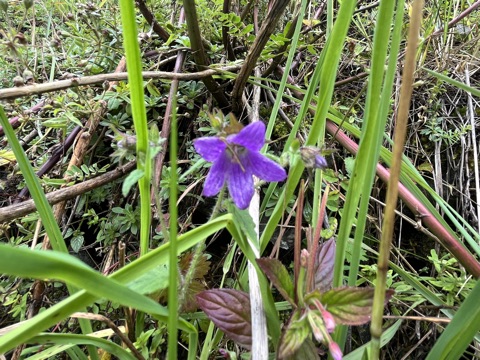
Campanulaceae Confirmed identification
Large Bellflower
Campanula latifolia
About this flower
From the field guide — published botanical records
Botanical information
- Scientific name
- Campanula latifolia
- Common name
- Large Bellflower
- Family
- Campanulaceae
- Genus
- Campanula
- Habitat
- Shady banks, forest edges and clearings
- Elevation
- ~2,000–3,600 m
- Flowering season
- July – August
- Colour
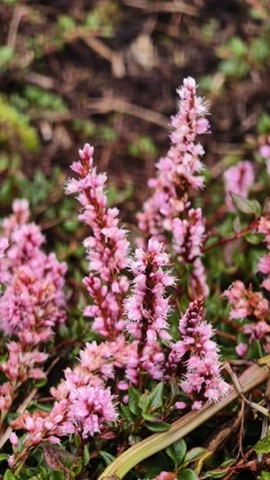
- purple
- Location found
- Valley of Flowers
- Date photographed
- 25 August 2026
- Identification
- Confirmed identification
Why it matters
In transitional forest-meadow it supplies large, accessible bells for heavy-bodied bees during mid-monsoon when meadow flowers dominate but shade flora is sparse.
Field note
“A big purple bell facing up from the meadow — one of the true bellflowers.”
Connections
Found at
Photographed on
Explore by
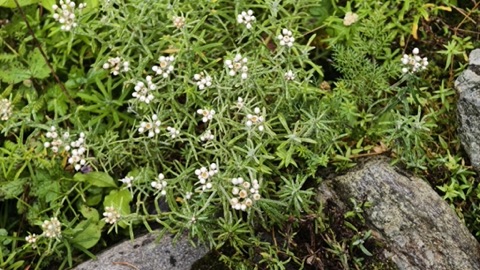
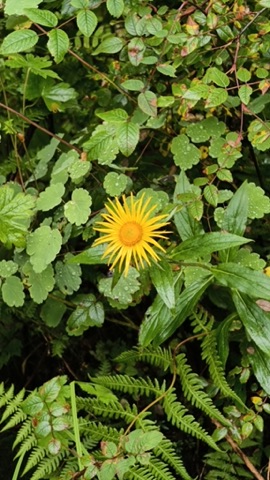
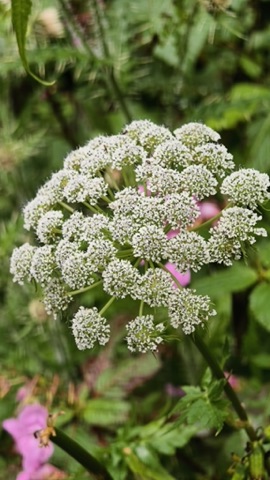
Also seen nearby
Other species photographed at the same places.




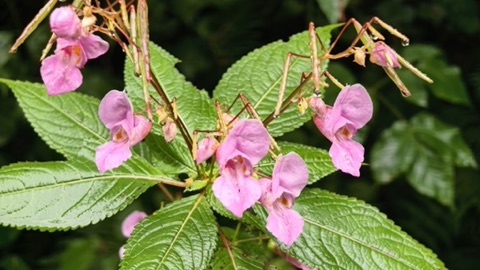

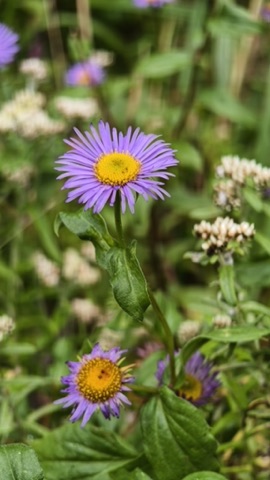

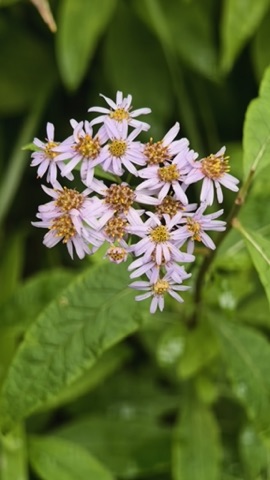

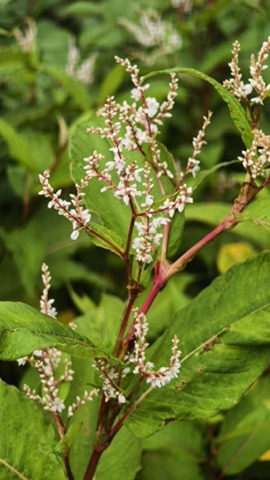

The Science of Beauty · signature layer
The Science of Beauty
Not is this beautiful — but why it looks that way, what its shape does, and how it lives inside a larger web. A layer you can read lightly or linger in.
Photography shows the surface. Structure explains the form. Ecology reveals the participation. One flower — many connections.
Botanical Geometry
radial bell, 5 fused petals
Upward bell, 5-pointed opening.
Observed from available photographs (2D, single viewpoints); not a lab measurement. Petal counts are visible where open and in focus.
↳ Do not infer 3-D symmetry from a single photo. Counts are reported as observed (+ family range) and may vary between individuals.
Visual diagram · from the photograph
Schematic only — it illustrates organization (center, repetition, proportion) as observed, not a measured botanical plan. Where the photograph is oblique or partly hidden, the diagram stays honest.
Visual Beauty Profile
Visual interpretation of this photograph — not a scientific beauty score.
In the Photograph — and In Nature
In the photograph
In the photograph: light direction, depth of field and background isolate the flower; colour saturation is from the phone's processing and the mountain light — beautiful but photographic.
In nature
Upward bell, 5-pointed opening. — In nature its form results from growth and pollinator interaction, not for human viewing. The structure is how it lives.
A spectacular photograph can come from light and isolation; a distinctive organism can come from structure. Keeping them separate lets both stay honest.
Mathematical patterns — with care
Observed vs DocumentedSymmetry
Radial or bilateral symmetry aids how a pollinator orients. It also influences how balanced the photo feels — a perceptual, not a rank of superiority.
Fibonacci / phyllotaxis
Not claimedNo Fibonacci phyllotaxis documented for this species in the sources used, and no spiral was measured in the photographs. Spirals were not assumed.
Golden ratio
Not measuredNo ratio was measured from the photograph. Golden-ratio claims are not made because single-image proportions are distorted by perspective and lens.
Fractal-like
Branching (if any) is described as 'fractal-like' at most — not mathematically fractal — to avoid overclaiming.
We never label a spiral as Fibonacci or a ratio as golden because it looks nice — only when there is a measured, cited botanical reason. That honesty is part of the beauty.
Beauty With a Purpose
What that beauty may do
Flowers are not beautiful for us. Colour, shape and scent are shaped by what helps the plant reproduce.
Overall symmetry (radial bell)
Positions reproductive parts and guides visitor approach; in this family it generally aids generalist insect access.
Interaction → Family-level: typically bees/hoverflies; species-specific visitor not documented for this exact observation in these sources.
family-level, not species-specific — labeled as suchColour (purple)
Contrast against green makes the flower detectable at distance; pigments also protect tissue at altitude.
Interaction → Most Valley flowers are visited by bumblebees and hoverflies in monsoon; no direct observation of visitor to this flower recorded in this journal.
general, not species-specificWhy This Flower Matters
One node in a web
All interactions below are labeled by evidence. 'Documented' means a named source for this species; 'possible' means family/region-level visitors; 'unknown' means not recorded in the sources used. The original photographs carry no pollinator observations.
Pollinators documented: None for this exact observation — family-level visitors listed as possible.
Possible (family/region-level): Bumblebees (Bombus) — common in Valley and Hemkund in August, visit many open flowers · Hoverflies — abundant at monsoon, family-level generalist visitors
Seed dispersal: Capsule / berry — not tracked for this species in this journal
One Flower, Many Connections
Pollination → reproduction · Seeds → next generation · Nectar/pollen/tissue → food · Structure → microhabitat where relevant · Soil interactions where documented. The flower's exact role here is unknown.
Life-value — qualitative, not scored
No invented “Earth Importance 93/100”. Qualities only.
- Ecological role
- unknown
- Pollinator relationship
- unknown
- Habitat specificity
- generalist
- Connections documented
- 0 in these sources
Conservation: Not separately assessed for this exact observation; some Valley species are sensitive to trampling and early snowmelt — treat as vulnerable by precaution, not by invented score.
How much do we know? (evidence available, not a quality score)
Life-cycle visualization
The circle, not the trophy shot
Click a stage. Generic where species-specific detail is unavailable — labeled as such.
Overwinters dormant, often under snow; germination cue is snowmelt and temperature rise.
General alpine perennial — honest when detail is not species-specific.
Connected to time
Across the year
Annual rhythm — July – August · Field guide
Environmental context
Where it lives — and why that matters
Elevation shown is the published location range (approx) — never per-photograph. Habitat is from the field guide where available, else from the photo's visible context.
Only claims with a source stay. No invented temperature, rainfall, soil pH, or sun exposure beyond what the location and habitat imply.
Why we should care
Wonder, not fear
Meadows like these sustain pollinator networks that spill into lower valleys; endemic high-altitude plants also hold genetic diversity for a changing climate. Caring is practical: staying on trails, not picking, and allowing identification to stay honest keeps the place resilient.
The signature story
Form → Ecosystem
- FormWhat we see in the photo — petals, symmetry, colour.
- StructureHow it's organized — radial bell, 5 fused petals.
- FunctionWhat it does — guide, shelter, expose pollen.
- InteractionWho visits — Bumblebees (Bombus).
- ReproductionPollination → seed set.
- EcosystemOne participant in a web that feeds, shelters and endures.
A flower is not something we just look at — it's geometry shaped by evolution, chemistry meeting another organism, a node in a cycle.
Categories: Fact = documented source · Observation = visible in photograph · Interpretation = visual reading of this image · Hypothesis = qualified possibility. Myths (every spiral is Fibonacci, every proportion is golden) are never repeated.
Flower → Place
Where I’ve Seen It
The place where I photographed this flower.
Map shows published, location-level positions (approximate) — photographs carry no per-image GPS.
Every encounter — canvas wall
More photographs
1 photograph of this flower in the journal. Gently scroll the wall — a small, natural scroll reveals the next canvas.
Drag or scroll — canvases on the wall