India · Uttarakhand · Chamoli

Hemkund Sahib

Chamoli · Uttarakhand · India · 3,950–4,632 m (approx)

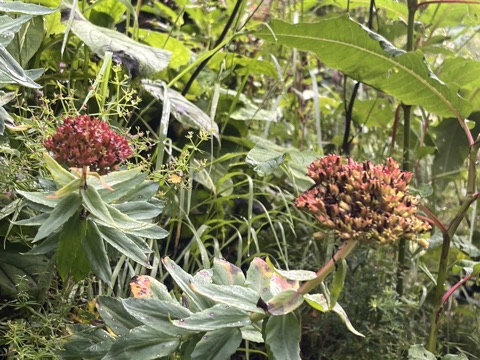
A glacial lake at 4,632 m, ringed by seven peaks and sacred to Sikhs. You reach it by a steep climb from Ghangaria, through flower-filled slopes.
111photographs
21species identified
26 Aug 202607:00 → 15:39 on the trail
Monsoonseason, derived from dates

Know this valley

A Field Guide to Hemkund Sahib

17 species documented from published botanical records for this place and season — with their families, elevations and bloom times. Which of them you actually met is answered above, in your own records.

The full guide →

Brahma Kamal

Saussurea obvallata

Asteraceae ~ 3,000–4,600 m blooms July – September

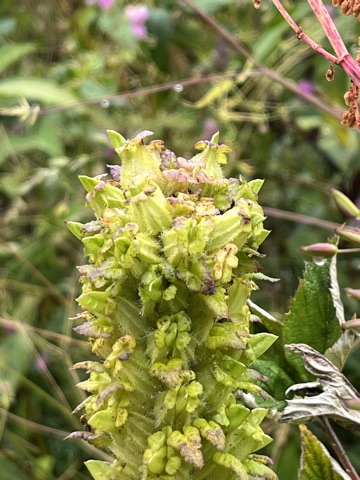
The most loved flower of the Garhwal Himalaya, and the state flower of Uttarakhand. Pale, papery leaves wrap a cluster of purple flowers on a thick stem — a shape that helps trap warmth in the cold mountain air. Common around Hemkund Sahib's lake, and found higher up in the Valley.

Habitat — Alpine meadows and scree, often near snow beds

Kasturi Kamal · Snowball Plant

✿ in my records →

Saussurea gossypiphora

Asteraceae ~ 3,600–4,800 m blooms July – August

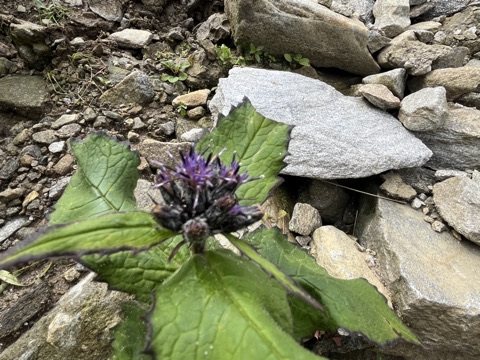
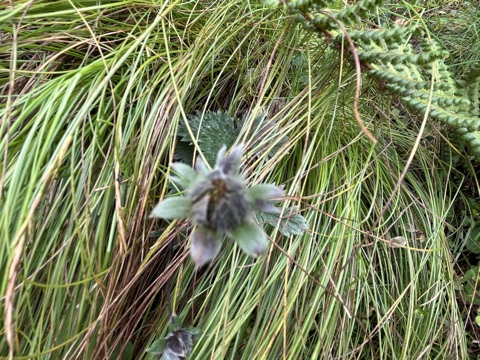
A small plant so covered in cotton-like hair that it looks like a ball of wool wedged in the rocks. The 'wool' keeps it warm through freezing nights at the very edge of where plants can grow. In August it parts to show small purple flowers. Found near Hemkund and the high Valley.

Habitat — Stony glacial ground near the snowline

Himalayan Blue Poppy

✿ in my records →

Meconopsis aculeata

Papaveraceae ~ 3,000–4,800 m blooms June – September

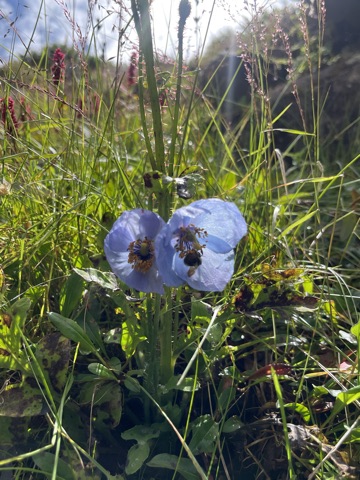
The blue flower trekkers come to find: nodding sky-blue petals on prickly stems, each flower lasting only a few days. One of the most famous and most photographed of all Himalayan flowers. It grows on moist, high slopes.

Habitat — Moist alpine slopes and meadows

Himalayan Whorlflower

✿ in my records →

Morina longifolia

Caprifoliaceae ~ 2,700–4,200 m blooms June – September

Its flowers open white, then turn pink once pollinated — so the plant shows its own story. The stiff, spiny leaves look thistle-like, but it is not a thistle. One of the valley's most striking shapes on dry slopes.

Habitat — Dry open slopes, trailside scrub

Musk Larkspur

Delphinium brunonianum

Ranunculaceae ~ 3,000–4,500 m blooms July – September

Deep blue-violet flowers with a spur and a musky smell that draws flies, since bees are few this high up. Low and sturdy, it handles wind well and grows on drier, higher ground.

Habitat — Stony, drier alpine slopes

Alpine Anemone

✿ in my records →

Anemone obtusiloba

Ranunculaceae ~ 3,000–4,800 m blooms May – August

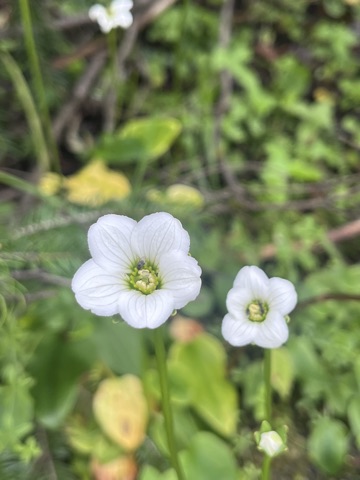
Simple, upward-facing flowers — white, lavender, or deep blue — sitting low on very short stems to stay out of the wind. One of the first flowers to appear near the melting snow.

Habitat — Compact alpine turf

Large-leaved Primula

Primula macrophylla

Primulaceae ~ 3,300–4,800 m blooms June – August

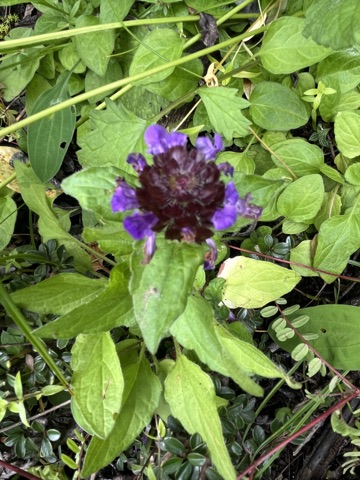
A round head of lavender-purple flowers on a white, powdery stem above broad leaves. Where snowmelt keeps the ground wet, many can grow together.

Habitat — Damp alpine meadows, snowmelt flats

Himalayan Gentian

✿ in my records →

Gentiana tubiflora

Gentianaceae ~ 3,500–4,800 m blooms July – September

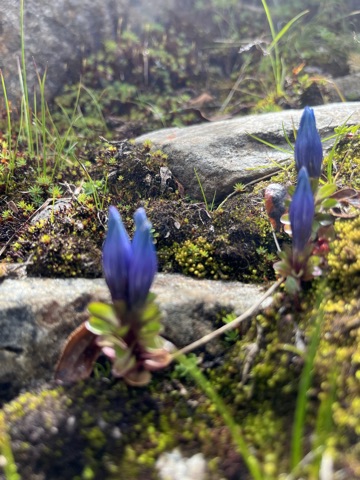
Small, deep-blue trumpet flowers that almost seem to glow. This kind keeps to the highest, mossiest ground. Several gentians bloom across the valley in the rainy season.

Habitat — Alpine turf and mossy ground

Himalayan Bistort

✿ in my records →

Bistorta macrophylla

Polygonaceae ~ 2,700–4,800 m blooms June – August

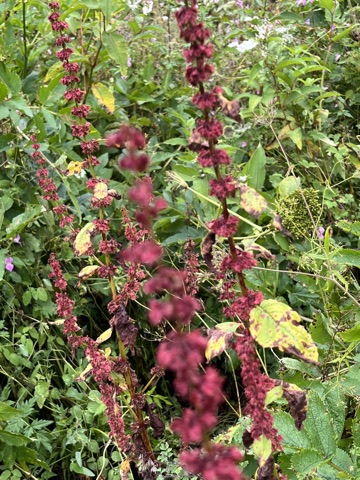
Pink flower spikes like little bottle-brushes above oval leaves. It grows in large drifts that can turn a whole meadow soft pink — one of the most common flowers of the rainy season.

Habitat — Meadows and turf, often in drifts

Bell Rhododendron

Rhododendron campanulatum

Ericaceae ~ 2,800–4,300 m blooms April – June (flowers)

The low, wind-shaped rhododendron of the treeline, with lavender-pink bell flowers in late spring. By August the flowers are gone, but its thick green cover lines the trail to Hemkund.

Habitat — Sub-alpine scrub and krummholz

Atis · Indian Aconite

✿ in my records →

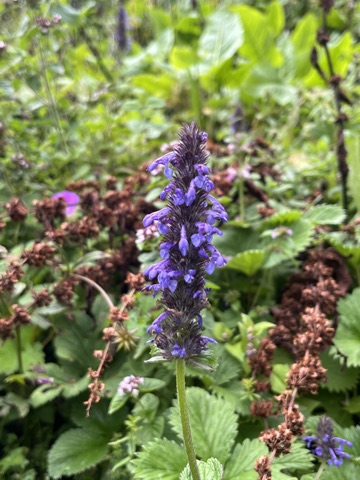
Aconitum heterophyllum

Ranunculaceae ~ 2,800–4,200 m blooms July – September

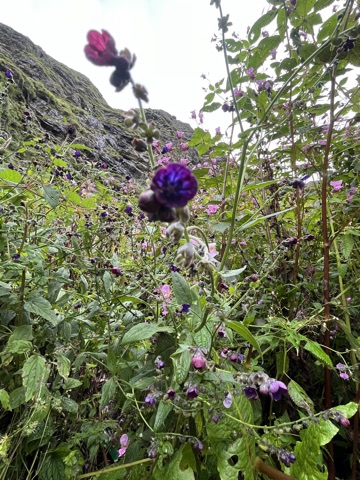
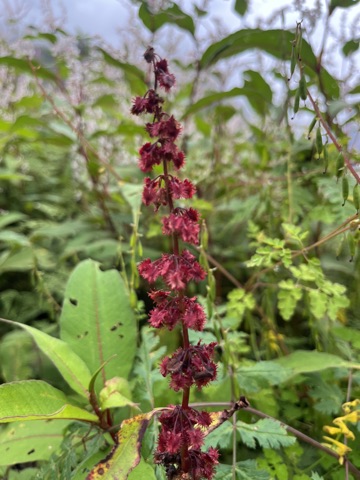
Blue-violet, hooded 'monk's-hood' flowers — from one of the Himalaya's most medicinal (and most poisonous) plant families. Over-harvesting for its root, 'atis', has made it scarce, so seeing it in flower is a good sign of a healthy slope.

Habitat — Alpine slopes and meadows

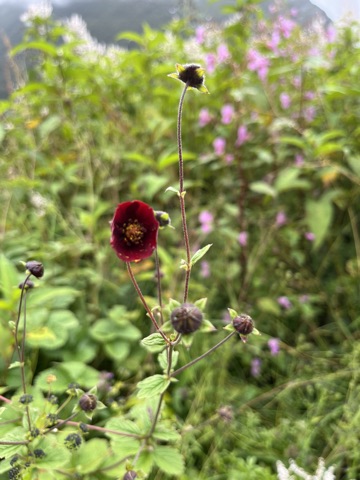
Crimson Cinquefoil

✿ in my records →

Potentilla atrosanguinea

Rosaceae ~ 3,000–4,500 m blooms June – August

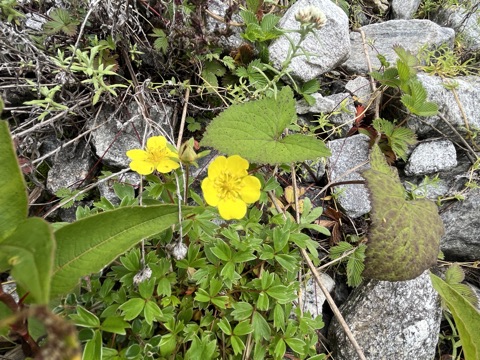
Deep red, almost wine-dark flowers on silvery, silky leaves — a cinquefoil that swaps its family's usual yellow for the darkest red in the valley. Sun-loving and tough, it holds rocky ground where other flowers can't.

Habitat — Rocky alpine ground

Himalayan Aster

✿ in my records →

Aster diplostephioides

Asteraceae ~ 3,000–4,500 m blooms July – September

A tall aster with one big flower head — a gold centre ringed by many fine blue-violet petals. One of the showiest daisies of the high meadows in late summer.

Habitat — Alpine meadows and open slopes

Himalayan Arnica

✿ in my records →

Cremanthodium arnicoides

Asteraceae ~ 3,300–4,800 m blooms July – September

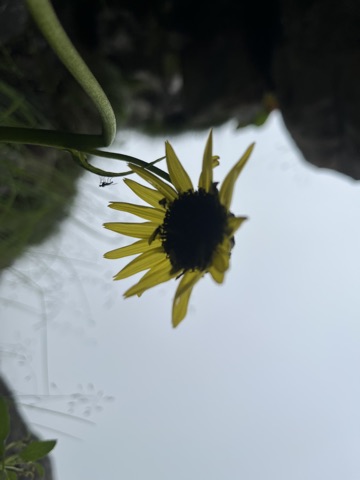
A yellow daisy of high, wet slopes. Its single flower head nods downward, which helps keep the rain off.

Habitat — Moist alpine slopes and stream banks

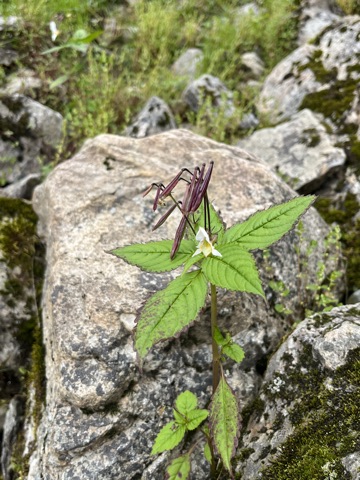
Epilobium latifolium

Onagraceae ~ 3,000–4,600 m blooms July – September

Wide, rose-pink flowers on low, spreading stems. It grows on bare river gravel and stony ground, following the meltwater downhill.

Habitat — River gravels, moraine and stream banks

Trailing Bellflower

✿ in my records →

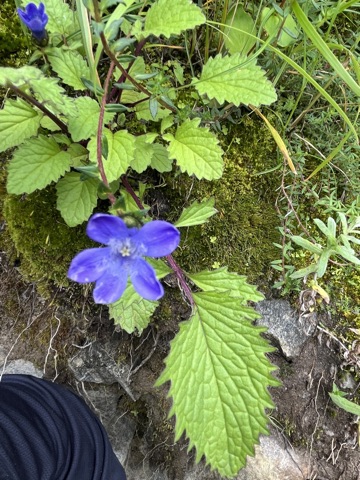
Cyananthus lobatus

Campanulaceae ~ 3,000–4,500 m blooms August – September

A low plant with bright blue, star-shaped flowers that lie flat against the rock. Each flower has white hairs in its throat. It opens in the sun.

Habitat — Rock ledges, banks and open turf

Blue Sowthistle

✿ in my records →

Cicerbita macrorhiza

Asteraceae ~ 3,000–4,300 m blooms July – September

A tall daisy-family plant with ragged, blue-violet flower heads — a wild alpine cousin of lettuce and dandelion.

Habitat — Open slopes, rocky ground and stream banks

Elevations and bloom windows are published approximations for the region. Guide entries describe the flora of the place — they do not claim to appear in the photographs.

Walking through Hemkund Sahib

The Journey, Hour by Hour

Every timestamp is read directly from the photographs — the day exactly as it happened.

Play journey mode →
Wednesday 26 August
07ʰ00′
07ʰ38′
09ʰ11′
10ʰ09′
12ʰ26′
13ʰ27′
15ʰ34′

Where I found them

On the Map

Shown at published, location-level coordinates for Hemkund Sahib (approximate). Coordinates were not recorded on the photographs themselves.